

Review: T-Mobile Wing

Read on for our full review of the T-Mobile Fly. If y'all're on T-Mobile, this is your best bet for a PocketPC device, but is it good enough to draw people over to the carrier?
(I'll spend a chip of fourth dimension here comparing the Wing to the T-Mobile MDA - there'southward a fuller Smackdown here, though. Check it out.)
The T-Mobile Fly (codenamed T-Mobile Atlas, henceforth just "Wing") is some other slider from HTC, meaning that it has a standard 240x320 screen, a few buttons beneath it, and a sliding keyboard. Information technology's a Windows Mobile 6 Professional-edition device, meaning it has a touchscreen and generally more power than the standard edition WM6 devices. It replaces the old, ugly, and underpowered T-Mobile MDA. I call the old MDA "underpowered" with a bit of chagrin, because spec-wise, the two are actually not all that different.
Specs

Both devices have the same Texas Instruments OMAP 850 processor, although the Fly'due south is clocked simply a stitch higher (201MHz vs 195). For a PocketPC/Pro WM device, that's relatively lackluster. I oftentimes found the device lagging. Normally I'm non ane to complain nigh a slow processor - these days fifty-fifty the OMAP 850 is enough to handle most tasks with minimal wait and shouldn't make it your manner. It becomes particularly noticeable in the slider form-factor, though, taking on average 2 seconds to switch from portrait to mural when you slide out the keyboard - sometimes as many equally v in my testing. It really hampers the overall experience of the device and makes information technology feel much worse than, honestly, it really is.
Datawise, both the Wing and the MDA are also the same: Edge and WiFi. This is as well disappointing, but expected, as both are designed for T-Mobile'south network. T-Mobile has purchased the necessary bandwidth the movement to 3G, merely when they actually programme to curl it out is nonetheless upward in the air. Bluetooth 2.0 is there equally well, and so you volition be able to transfer files relatively quickly and as well utilize A2DP stereo headsets. Rounding out the standard specs on the Wing are USB 1.1 (disappointing), no IR (fine), and an 1130mAh battery - which is smaller than the MDA's simply notwithstanding good enough for my usage. MicroSD for storage. 2 Megapixel camera. Indicator lights for WiFi, Bluetooth, and the radio are nicely hidden within the speaker grille.

Too standard/disappointing: the RAM. After a fresh reset, you lot're looking at abut 39.44MB of storage memory (less, though, because of the born programs, come across beneath). There is also a total of 43.87MB of program retentiveness. There's a huge problem there, though, considering fresh out of the box the Wing comes with several pre-loaded apps (MyFaves, T-Zones, the home-screen music actor) that make a significant dent in your usable space for running programs.
As a phone, there's not a whole lot to report. Sound quality is boilerplate, not great. Book is fine on both regular calls and speakerphone. Battery life is also fine - it gets me though an average day of an hr of WiFi, a hour of calls, and interacting with everything else all mean solar day.
Form Cistron


The await of the Fly is heads and shoulders in a higher place that of the MDA. It is a dark shade of blue that looks about iridescent in the proper light. The Wing also sport the at present-ubiquitous "soft-affect" pigment. Although I wouldn't get so far every bit to telephone call the casing a "fingerprint magnet," it definitely does pick upwardly smudges from your fingers here and there.

The Fly definitely has the best slider form cistron of whatever of the slider'southward I've used. Information technology'due south very thin (2.3 x 4.3 10 .7 inches) and rounded nicely on the corner. My favorite part about the overall shape and feel of the Wing is the swoop (aw, heck, we'll call it the "wing, little west") on the back. It's a curved ridge that subtly gives you something to rest your fingers on and just makes the device experience "teh awesome." The ridge is too replicated, less prominently, on the front end, for aesthetics.
The Wing cuts down on the number of concrete buttons compared to the MDA, only that's non the worst thing in the word. You take your standard 5-fashion, send, end, soft buttons, Windows, and OK on the front. All accept fine tactile feedback. I especially similar the five-mode pad, which has the soft-touch paint on it and as well is very "cone-like," which helps in a style I can't fully explicate.


Other buttons include a vocalisation-command and mail button on the right, a camera button on the left forth with a standard (though oddly placed) volume slider, and finally a power button on the pinnacle. I gotta say, though, I'm not a fan of the power push these days. I much prefer using the any button to turn on the device and then the Stop button to actuate the keyguard/turn off the screen. If you must have a power push button up there, have information technology bring upwards a quick-listing. It's only aggravating to accept to hit an out-of-the way button every time you want to interact with the device. Most of the buttons are customizable, though. Not the power button. arg.
The slider mechanism on the Wing is great. It's spring-loaded, natch, and feels very sturdy. Somehow, though, HTC screwed up with their tried-and-true slider design this time, though. When the device is closed in that location's a small gap between the two halves of the device, pregnant that there's a lilliputian wiggle room at that place. Yous tin experience and hear the device clacking on itself a fleck when it's closed. It's possible I just got a bum unit. On the other hand, that extra niggling infinite does permit for y'all to more than easily fit a instance that needs to have some plastic in there.
At that place'south a lanyard loop if that's how y'all roll and - hooray! - a full-length stylus. There'southward too a niggling rubber grommet over the USB port - boo. Also, no 2.5 or 3.5 headset jack - you accept to use the HTC-usb-to-headphone kludge, boo once more.


Keyboard

The keyboard on the Wing is darn near perfect. Although the buttons on the MDA accept always felt a little "chicklety" to me, the new style of keyboard that HTC has put on the Fly (and other new sliders) is wonderful. The keys too are "soft-touch on," so their feel is much improved. The travel / click feel is good. Also nice is that the soft-keys on the keyboard have been put in their proper locations - underneath the actual soft-key area on the screen.
It's merely very well thought-out - picayune ridges on your home keys, the numbers are on the right where you could hit them with i-hand (if y'all're dialing). Windows and OK buttons on the lower-left where you lot'd expect them (i.due east. where you'd find Alt and Ctrl buttons on a full keyboard).

I'm pro-Wing-keyboard — equally far as sliders get. I'grand non generally a fan of the slider-form factor specifically because the keyboards are as well large to use one-handed. On the Fly, though, I've been able to manage it — barely. Different strokes for unlike folks.
Also - LED Caps and Alt indicators are classy.
Software
The Fly comes preloaded with quite a bit more than the standard Windows Mobile 6 Software, it adds:
- Windows Live Search (though you lot'll want to upgrade to the newer version that has Movies added)
- T-Mobile E-mail Wizard
- OZ Communications IM (for IM with AIM, Yahoo, and ICQ)
- T-Mobile HotSpot Login Utility
- Winwap Technologies T-Zones
- T-Mobile's MyFaves App
That'southward the skilful news. Here's the bad: After a fresh reset, with nothing running, the T-Zones and MyFaves appear to be running in the background all the time. What's worse, afterward a difficult reset, my baseline bachelor program memory was a measly 12.05MB. That'due south barely acceptable.
Fortunately, you tin can uninstall most of those programs via the standard "Remove Programs" app in settings. Even so, even clearing as much out as I could, I found I by and large hovered effectually 14MB free tops.
In any instance, the added software is very prissy. I'm peculiarly happy that the OZ IM customer is in at that place, considering I've yet to find a 3rd party IM app that is both easy to use and appropriately priced. As well included are most the standard WM6 apps that we've come to know and love - including my personal favorite: Internet Sharing, which makes DUN over Bluetooth elementary. Non included, strangely, is the new Windows Live app, which means yous won't be able to get the Alive Search field on your today screen without some hunting around on the web. Bummer.
There's likewise a link to download Handango InHand, merely it's non a freebie. InHand is also not very gentle on your plan memory, and so my vote is to give that i a laissez passer.
Rather than Voice Command, the Wing uses HTC's speed dial app. That's six of ane, one-half dozen of the other in my opinion. Vocalism Command nevertheless feels pretty wonky to me, so I don't listen manually setting up vocalism shortcuts that I know will exist more reliable.
As with any Windows Mobile 6 device, you lot become the great email app with html email, blazon-to-filter, and easy-to-setup e-mail accounts. The Office Apps are besides much improved in WM6, Pocket Cyberspace Explorer is marginally amend, and speed overall is improve on the Wing than on the MDA. It won't knock your socks off (see all the complaints to a higher place), merely information technology'll do.
Finally, I'm fond of the music plugin for the today screen, but not as fond as I would be if HTC had included their Audio Managing director application. Still, whatever way to collaborate with the Windows Media Player that doesn't require me to directly collaborate with the Media Thespian's interface is welcome.


Comparisons

If you lot're on T-Mobile and looking at Windows Mobile, yous are basically looking at 2 choices today (or rather, you're looking at ii choices that I would feel proficient most recommending): the T-Mobile Dash and the Wing.
Here's the surprise: the basic hardware specs on the Wing and the Dash are nearly identical. On the Fly yous get the following benefits: a slightly larger screen (just same resolution), a touchscreen, Windows Mobile 6 Pro instead of Standard, a slightly better camera, and a larger keyboard. The drawbacks: a bulkier device overall and, well, a larger keyboard that's hard to utilise one-handed.


So: which should you lot go. My vote is the Dash. Since you're non getting significantly more ability out of the Wing, the added benefits of the touchscreen and Windows Mobile 6 Pro don't actually justify the larger size in my book. The Nuance, especially now that information technology has an official Windows Mobile 6 upgrade available, is a wonderful niggling machine.
Conclusion

So the terminal verdict on the Wing is this: Neat grade gene, bad specs. If you're on T-Mobile and looking for a PocketPC, it's your all-time pick mainly considering information technology's your only viable choice. Simply if you're thinking of switching carriers to utilise the Wing, don't. The 8525 on AT&T volition have Windows Mobile half dozen shortly, the Mogul on Sprint makes the Wing look like a tinker toy, and Verizon will before long have the XV6800.
I don't desire to badmouth the Wing too much - it is a respectable device… for T-Mobile. T-Mobile has the best client service but the worst information support. Until that gets fixed, the Wing will exercise you fine if a slider PPC is what you lot want.
Xbox Insiders Update
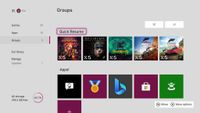
This huge Xbox 'Quick Resume' update will give gamers more control
Microsoft is adding a new feature to Xbox consoles, allowing you lot to permanently store up to two games in a Quick Resume state at all times. The feature is heading out first to Xbox Insiders in the Alpha testing ring earlier hit the full general public.

Source: https://www.windowscentral.com/review-t-mobile-wing
Posted by: campbellcrusuppeas.blogspot.com
0 Response to "Review: T-Mobile Wing"
Post a Comment