

Which Animal Is Thought To Have Been The Earliest Domesticated Animal?
We have attempted to domesticate certain animals and failed. This happens for several reasons. Most of the time, it is because some animals are so wary of humans that the creatures will flee at starting time sight. Others are but too aggressive to exist domesticated, which may lead to attacks on and even the death of the breeder.
Another distinct category of animals is classified as tamed but not domesticated. In these cases, the fauna has been bred to tolerate and maybe obey humans, but information technology is not rubber enough to be classified as a domestic beast. Tamed animals withal have their wild instincts and can speedily turn rogue.
10 Zebras
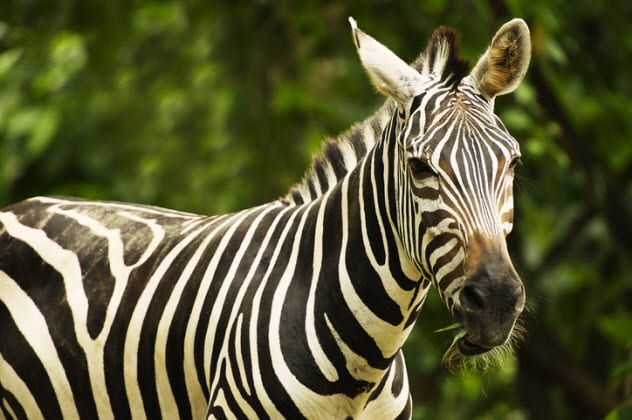 Colonists encountered transportation problems as they moved deeper into Africa in the 19th and 20th centuries. Their horses were susceptible to different diseases, and bringing new horses from Europe was not ever that piece of cake.
To solve this problem, they turned to the zebra, a close relative of horses and donkeys that is plentiful in the African plains. Zebras are also allowed to several diseases that afflicted horses. However, all attempts to domesticate the zebra failed.
The zebra is a very alarm and aggressive creature. Information technology is naturally suspicious of other animals, including humans, and will abscond at the slightest hint of danger. It is a fast runner, making it extremely difficult to capture. If caught, information technology volition deliver heavy kicks and bites in an attempt to escape.[1]
Although the colonists managed to become some zebras, they quickly realized that these animals are smaller than horses and uncomfortable to ride. Likewise, zebras do not like to be ridden and will become aggressive after a while—fifty-fifty after they have been tamed.
The ambitious nature of the zebra has been traced to its evolution. It shares its habitat with predators like lions, crocodiles, hyenas, leopards, and man. This was a major issue with the colonists, who feared that these predators would be attracted to their domesticated zebras.
9 Great White Sharks
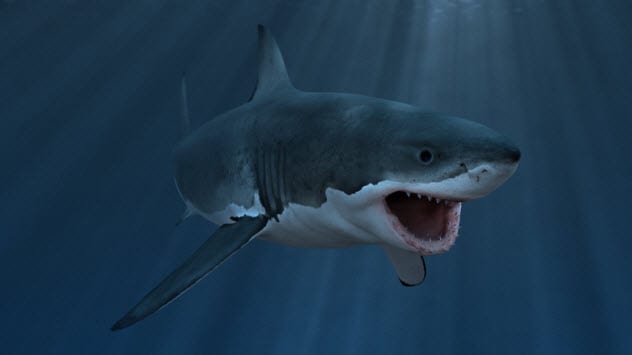
A series of attempts to tame or domesticate the corking white shark have failed because captured great whites will unremarkably die within days. The first bully white held in captivity died within hours. The longest this animal has been held in captivity is 16 days.
Captured smashing white sharks are too addicted of hitting their heads on the aquarium's glass walls. One shark held at Okinawa Churaumi Aquarium in Japan connected bashing its head on the drinking glass wall until it died. Another one held at California'due south Monterey Bay Aquarium hit her caput on the wall continuously and attacked two other sharks until she was freed.
Dandy white sharks don't fare well in captivity for several reasons. First, they are cracking travelers, capable of moving through an entire sea. They besides need lots of h2o to breathe. So, even big aquariums are too minor for them.
Captured sharks are likewise unbelievably aggressive and will usually reject to consume. When they do, they require alive prey, which is hard for the aquariums to provide.[2]
eight Dingoes
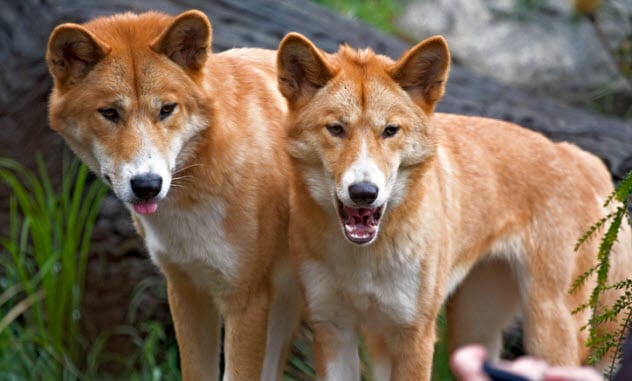
Dingoes are doglike animals that alive in Commonwealth of australia. Despite their similarities to dogs, they are not considered dogs and are not domesticated. Australian farmers fifty-fifty consider them as pests. Interestingly, it seems like we partly domesticated the dingo thousands of years agone before allowing them to return to the wild.
There is a little difference in the style we domesticated dogs and dingoes. Although dogs are considered companions, early native Australians—who probably domesticated the dingoes—considered them a source of food. Besides, native Australians did not selectively breed the animals for their favorable characteristics.[3]
seven Moose
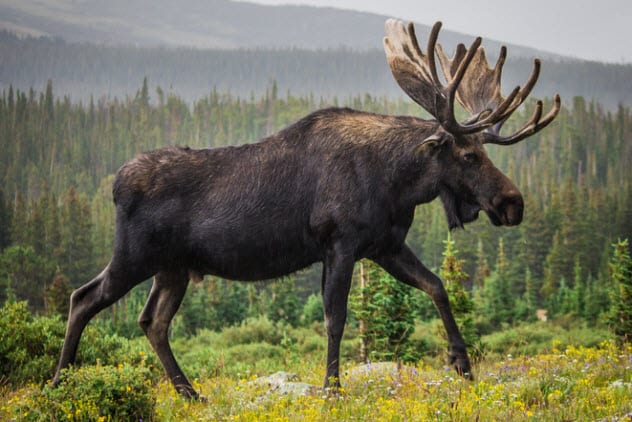
A few centuries ago when equus caballus cavalries were still a affair, King Karl Eleven of Sweden decided that he wanted a more ferocious animal to replace his horses. An animal that would send the horses of the enemies fleeing the battlefield at showtime sight. He settled on the moose.
Unfortunately for the king, the plan never worked out. As he later plant out, the moose was too dangerous to approach. This worsened during mating flavour when it got uncontrollably aggressive. Besides, the moose is susceptible to disease and has a varied diet that is hard to provide.
Moose are also smart creatures and will usually avoid the war forepart. When they did become near the battlefield, they fled the moment another moose was killed. Other attempts to use them as meat were unsuccessful. They would refuse to become to the slaughterhouse when they realized that the moose taken there before did not render.
Despite these challenges, there is an ongoing moose domestication projection at Kostroma elk farm in Kostroma, Russian federation. The projection started in the 1930s when Joseph Stalin decided to set up a moose cavalry. Like Male monarch Karl XI'due south program, Stalin's projection failed. But Nikita Khrushchev revived it when he attempted to domesticate moose for meat. This also failed, and several moose farms shut down.[4]
Nevertheless, the Kostroma elk subcontract remained functional and is yet trying to domesticate the moose. Primarily, the facility is used for the production of moose's milk now.
6 Raccoons
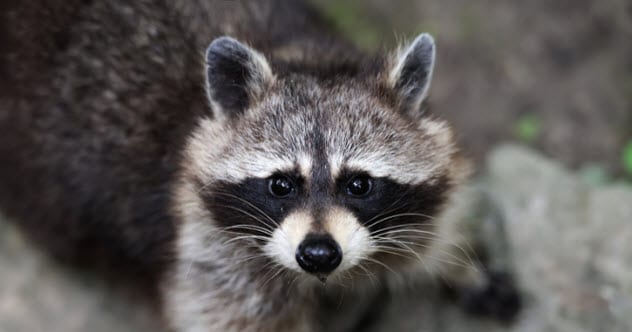 Raccoons are a good candidate for domestication. They are skilled climbers and tin can enter tight spaces, making them an excellent working beast. If domesticated, they would be useful for senior citizens and the physically challenged. Notwithstanding, they cannot be used as working animals considering they have not been domesticated.
Despite their cute looks, raccoons are aggressive and destructive. They are naturally curious, like moving around, and quickly become subversive when confined to an surface area. They usually need to be constantly monitored and bite when hungry or angry. Bites can turn fatal because they can infect humans with rabies.
As raccoons can use their hands like humans, they volition usually attempt to open annihilation they lay their easily on. They are likewise experts at escaping. In fact, this is a major reason why domestication attempts take failed. Besides, they like being alone, are not social animals, and are not loyal to humans.[5]
5 Foxes
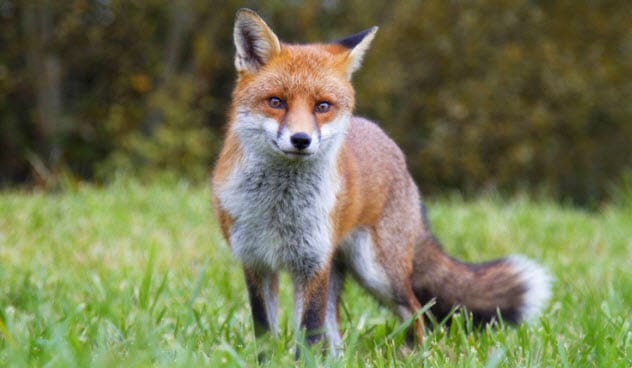
We once fully domesticated foxes. However, they died off and modern attempts to domesticate them once again have been partly successful.
In a flake of irony, the extinct fox we domesticated was called the Fuegian or Yaghan canis familiaris. Information technology was domesticated from wild populations of the culpeo (aka the Andean trick). Curiously, the Fuegian dog was not really popular during its time. This was probably because it was non as useful equally a regular dog.
There is besides evidence that we tried to domesticate foxes long before the Fuegian canis familiaris, but we dumped them for cats. Cats were selected over foxes considering we could not determine what to use the foxes for.
Foxes are hard to domesticate because of their unbelievable stubbornness. Russian geneticist Dmitry K. Belyaev sought to change this in the 1950s when he started a projection to domesticate the silver-black foxes. Silver-black foxes are actually reddish foxes affected with melanism, which is the opposite of albinism and makes affected animals appear black.[6]
4 generations afterward, the foxes were displaying doglike behaviors. They developed a fondness for people, wagged their tails, and licked their breeders. L generations subsequently, they are barking, answer to humans, and understand gestures. They also make noises that are singled-out from wild foxes.
The project is ongoing and is considered successful. Yet, the foxes are tamed only non domesticated.
4 Elephants
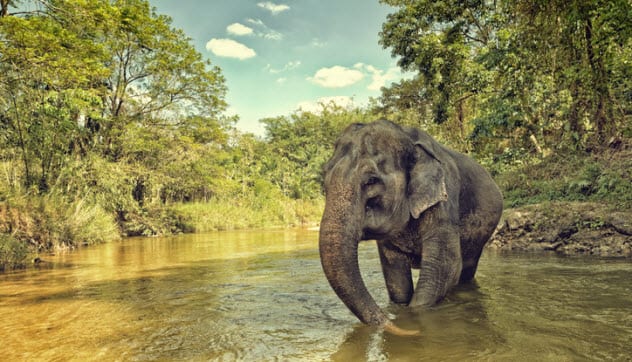 Asian elephants are not considered domestic animals even though they have been captured and trained for over 3,000 years. Rather, they are classified as tamed or wild animals. Captured and trained Asian elephants are non considered domestic animals considering they are non selectively bred.
"Selective convenance" means that humans will select the offspring to breed based on certain favorable traits. To be domesticated, they would need to be selectively bred for upwardly to 12 generations. By the 12th generation, they should be genetically distinct from their wild ancestors and would exist considered domestic.
In general, captured Asian elephants are not selectively bred. (Simply a few were selectively bred past the second generation.) This makes them wild animals. They but allow humans to ride them because they accept been trained. Nevertheless, they are simply like any wild animal, which makes them unpredictable.[7]
3 Bonobos
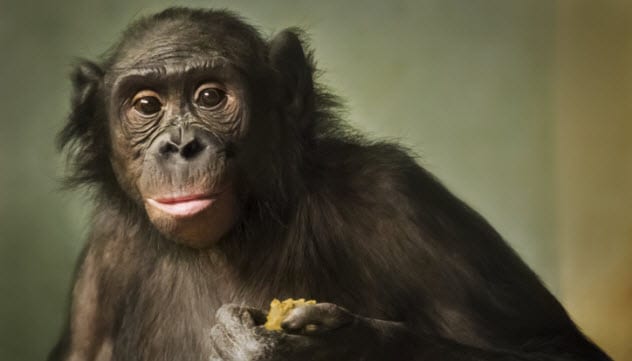 Bonobos are unique on this list because they are non wildlife. They are domestic animals even though they were not domesticated by humans. Bonobos domesticated themselves.
Scientists are not certain how this happened. But they think information technology began to occur about two meg years ago when the Congo River formed in Africa. This event separated the ancestors of the bonobos and the chimpanzees that lived there. The primates to the north of the river evolved to go bigger and more aggressive because they competed with the bigger gorillas for nutrient.
On the other side of the river were the primates that would get the bonobos. They had more than enough food to eat, and at that place were no gorillas, either. Their females became picky and decided which males they wanted to mate with. Aggressive males died out because the females preferred gentler males.[8]
2 Hippopotamuses
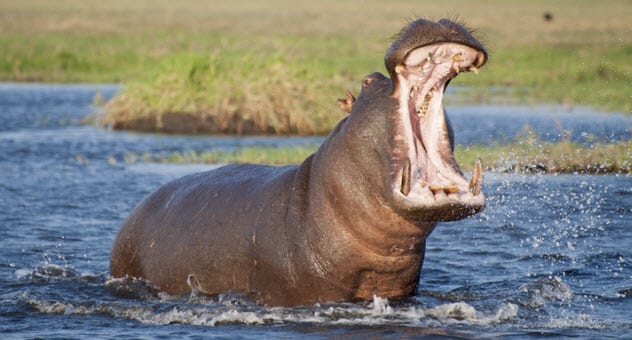
Humans have wisely stayed away from the hippopotamus, one of the globe's deadliest animals. More people are killed by hippos every year than lions, elephants, leopards, buffalo, and rhinoceroses combined.
Obviously, any meeting between a human and a hippo volition virtually likely end upward desperately for the homo. Hippopotamuses have large teeth and are unbelievably fast. Hippos can stitch to 48 kilometers per hour (30 mph) despite their massive weight. Usain Bolt, the world'southward fastest human being, barely reaches 45 kilometers per 60 minutes (28 mph).
Still, there accept been contained attempts to domesticate the hippo. Equally expected, those efforts ended badly. In 2011, Marius Els, a South African farmer and army officer, was killed by a i.ii-ton, five-year-old hippo he was trying to domesticate.[nine]
Els called the hippo Humphrey and considered information technology a pet. He often took Humphrey swimming and once rode on it, proverb that the beast was "like a son" to him. Humphrey did not consider Els as a father because it killed him in the same river in which they used to swim.
Before killing Els, Humphrey was already a known local terror in the area in which they lived. The hippo once chased a human being and his grandson upwardly a tree afterwards they canoed on the river that ran through Els's farm. Humphrey was also infamous for killing calves and chasing golfers at a nearby golf course.
i Coyotes
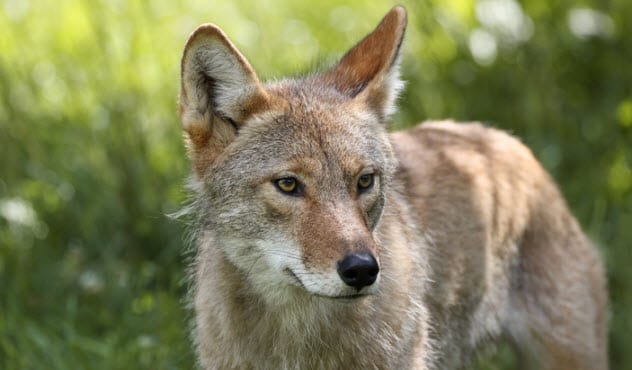
All attempts to domesticate the coyote take failed because they naturally avert humans. Human breeders are besides wary of these animals because they can be infected with unsafe diseases like rabies and tularemia.
However, some breeders take braved these risks and tried to domesticate the coyote. 1 mutual method is to crossbreed a male coyote with a female dog. While the resultant hybrid is less aggressive toward humans, it is not a true coyote.
Another method is to take young wild coyotes from their mothers and train them into machismo. Wild coyotes become less wary of humans after about iii generations, only they are non domestic animals. In fact, several attempts to domesticate a coyote have concluded with the coyote attacking the breeder.[10]
This happens because a coyote close to humans could brainstorm to consider a homo as prey and will await for the best time to attack. Interestingly, coyotes are slowly becoming domesticated. This is happening naturally, the aforementioned manner it probably did with bonobos.
Source: https://listverse.com/2019/02/06/10-animals-we-failed-to-domesticate/
Posted by: campbellcrusuppeas.blogspot.com
0 Response to "Which Animal Is Thought To Have Been The Earliest Domesticated Animal?"
Post a Comment